
Top Mountain Routes in Mallorca Starting From Palma
Welcome to my top 5 favourite mountain rides in Mallorca, all originating from where I'm based, in Palma.
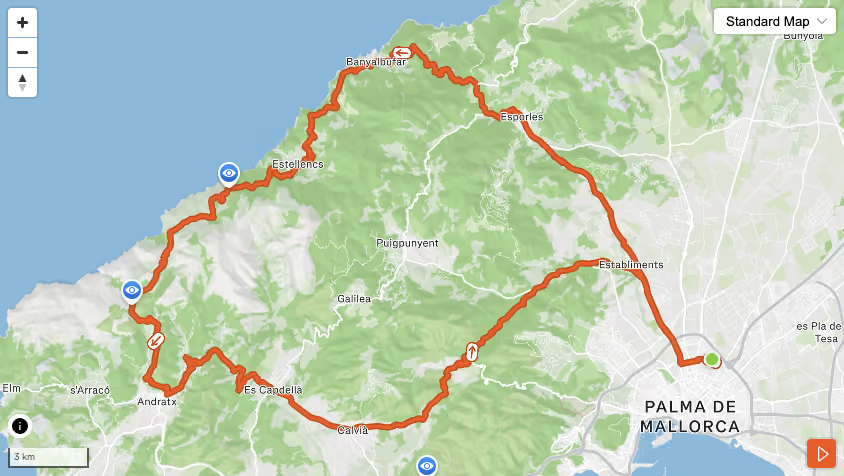
Maps by Strava.
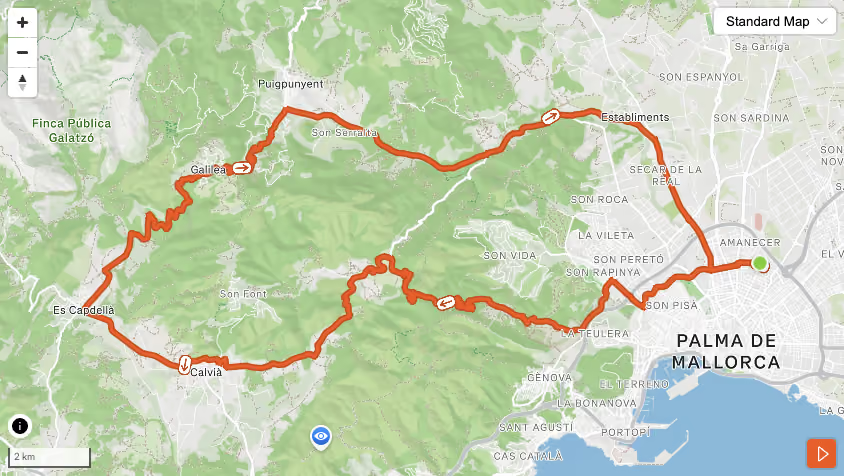
1. Es Capdella 50k Loop
Palma - Sa Creu - Es Capdella - Galilea - Establiments - Palma
This route is one of my favourite rides if I only have a couple of hours in the morning before work and I really feel like I want to put some metres into the legs. It gets me into the mountains very quickly, and once I'm in the mountains, the roads are exceptionally quiet almost all the way back to Palma, just under two hours later. It's quite punchy, with nearly 900 metres of climbing within the 50 kilometres that make up the route. Like I said, this is a short, punchy one if you really want to build up some mountain metres through the week but don't have that much time.
We'll leave Palma and head through some of the small towns. When you get to the Son Vida area, which is close to the beginning of our first climb, just be aware that, on a weekday around school time, it can get very busy. I would avoid this drop off time by either leaving quite early like 0700 or a little later at 0900.
“Military Hill”
Once you exit the Son Vida area, we're going to make a right turn at the roundabout and begin our first climb, Col de Sa Creu. This is one of the most visited climbs by the locals here, as it's literally just outside Palma and is also reasonably challenging. It's around five kilometres long, with an average gradient of between 5 and 5.5 percent, with some ramps on the switchbacks reaching maybe 7 or 8 percent. This one can be quite a killer, not only because it's challenging in itself, but also because you're hitting it with cold legs, having only been on the bike for maybe ten minutes. That means it can sometimes feel a lot harder than it actually is.
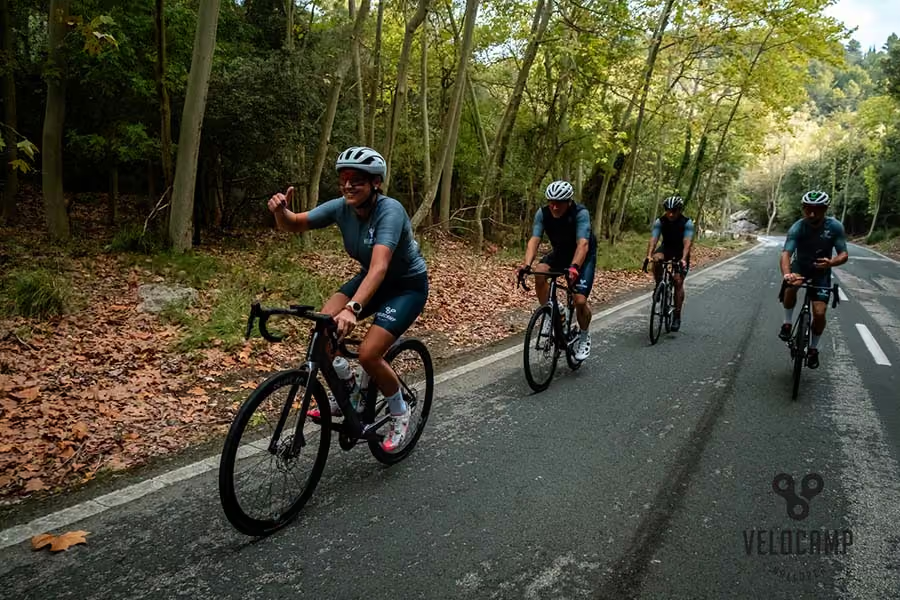
It's a beautiful winding forestry road with almost no cars, and the only thing you'll really notice at the beginning of the climb is the military base on the left hand side. Start easy on this climb. If you push too hard at the very beginning, trust me, you'll blow up quite early and find yourself struggling for the final two or three kilometres. Pace yourself and enjoy it.
You reach the top of the climb and then begin your descent down the other side, coming down the back of Col de Sa Creu. Do be aware that some of the switchbacks can be quite slippery at certain times of the year, especially during the winter months when we can see green moss growing in the shaded areas. During the warmer months, pine needles falling from the overhanging trees can also make the switchbacks a little slippery. Take care.
Calvià
When you reach the bottom, we'll make a left turn and begin a nice, fast, twisty section that passes through the village of Calvià, with a few ups and downs along the way. After passing the horse stables, you will make a right turn and follow the road which drops you down into the main approach towards the beautiful village of Es Capdellà. The road undulates here before rising slightly for around the last two kilometres to around 2 to 3 percent before eventually arriving in Es Capdellà and making the right turn that leads onto the main climb of the day, Galilea.
Galilea
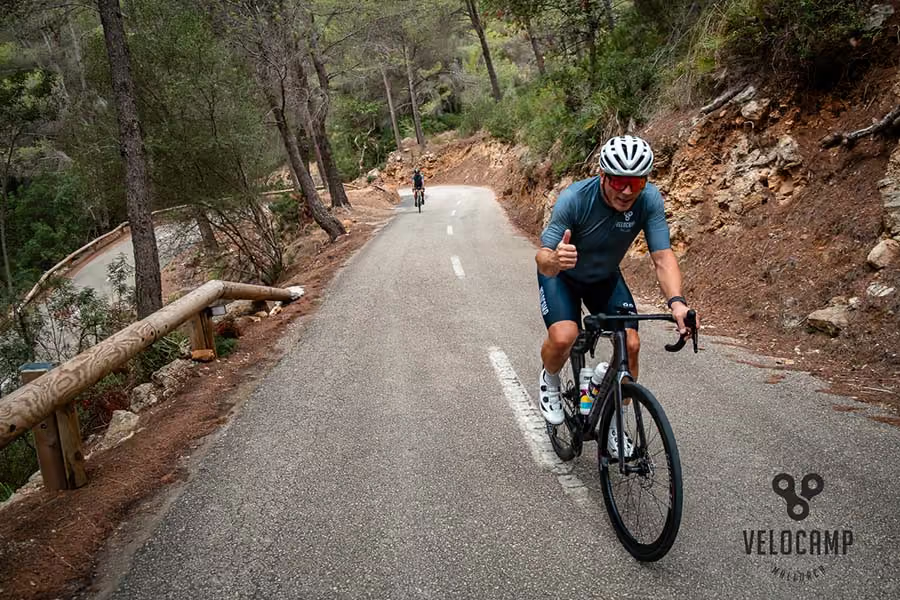
Galilea is somewhat similar to Col de Sa Creu in both distance and elevation. It's maybe just a little longer, with an average gradient sitting around 5 to 6 percent for the duration of the climb. Once again, it's another beautiful forestry climb with very little traffic. Do bear in mind that there is the village of Galilea at the top, so there are cars passing from time to time, either heading to or leaving the village. Care should always be taken.
Again, just like Col de Sa Creu, take it easy from the bottom. Especially during the warmer months, this climb can feel quite hot. Pace yourself, otherwise you'll blow up before reaching the top.
I like to think of this route as one where I can find a really nice rhythm because it's primarily climbing for most of the ride. If you try to push from the very beginning, it's either going to become an extremely challenging ride or you'll simply come apart before getting back to Palma. I prefer to pace myself, take in the views, and enjoy some really good Zone 2 climbing.
When you reach the top of Galilea, I like to roll straight over the summit and begin the descent rather than stopping and letting the legs go cold. Take real care on the descent. The road surface isn't great in places, there are some potholes and patches of gravel, and it's due to be resurfaced. Make sure you take it easy before eventually arriving in one of my favourite villages on the island, Puigpunyent.
Puigpunyent
Something worth noting is that, at the junction before we turn right and begin the road back towards Palma, there is a small water fountain next to the park bench, which is a great place to refill your bottles. If you want something more substantial, there's also the village shop on the right hand side as you arrive in Puigpunyent, where you can top up your bottles or grab anything else you need.
We then begin the long 14 kilometre road from Puigpunyent that takes you all the way to the Establiments turn off. Riding it in this direction is fantastic because it's the faster, slightly downhill section, which can see you cruising at speeds of between 40 and 50 kilometres per hour, depending on your legs, almost all the way to the Establiments turn off, which is around 10 kilometres away. Enjoy this one. Get down on the drops and, if you're riding in a group, even better. You can really push along this road.
Again, take care. It's relatively busy with traffic travelling to and from Puigpunyent, so there may be cars overtaking along the way.
Establiments
Be careful not to miss the left turn that takes you down towards Establiments. If you continue straight on, you'll also get back to Palma through the Can Valero industrial estate, but that route can get a little busy and dusty. Personally, I much prefer heading back through Establiments. There's an initial downhill section followed by one very small climb that takes you up and over through the village before joining the main road that descends all the way back into Palma.
And that's it. That's the complete route. You should be more than ready for a nice big breakfast after pushing yourself through the mountains and feel satisfied that you've got your workout done for the day.
Like I said, this is a great one for those shorter days when you've only got a couple of hours to spare but still want to push yourself and get some mountain metres into the legs. Quiet, challenging, with climbs, descents, and fast roads back into Palma, this one really has it all.
2. Orient and back down
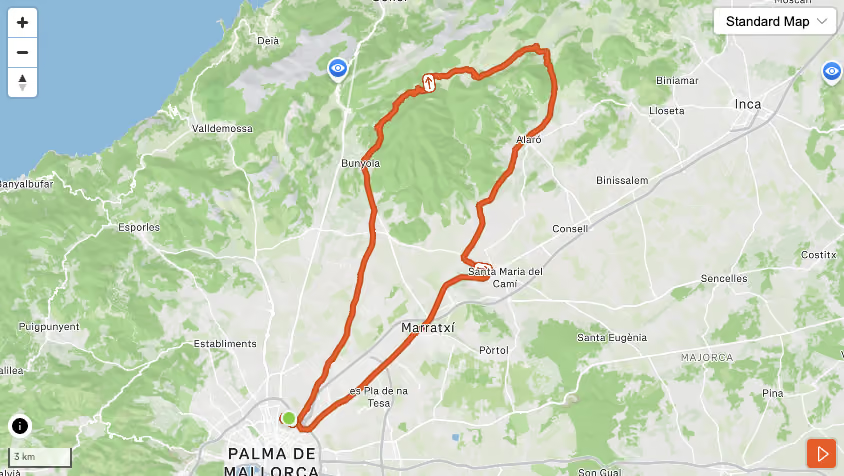
Palma - Bunyola - Orient - Alarò - Santa Maria - Palma
This is another fantastic route if you're based in Palma and you only have a couple of hours to spare on a particular day, but you still want to get some climbing into the legs as well as some flatter roads. It's a great choice whether you want to push yourself or simply enjoy some really relaxing solo Zone 2 riding.
There's a couple of different options to get out of Palma and head towards Bunyola. The most commonly ridden way, and the way Strava may plan it for you if you've got the Most Popular routes box ticked, is out of Palma and all the way along the main Sóller road. Now, even though this may be the more direct route, I personally don't like it for a couple of different reasons.
Firstly, it's very busy, with huge trucks heading towards the mountains that sometimes don't leave a lot of room. Just the sound of them thundering past can be quite annoying. The other thing is that you almost always have a headwind one way or the other. It's almost never on the side. So, it's personally a road that I almost always try to avoid.
Instead, I'll choose to take the Camí de Bunyola road, which is a lot quieter, more enjoyable, and generally sheltered from the wind. The last two or three kilometres, as you approach the village of Bunyola, can be a little draggy and slightly uphill. But again, there's lots to see around you, not too much traffic, and it's one that you can just slowly pace yourself along as you make your approach to Bunyola and the start of the main climb of the day.
Bunyola
We make a right turn opposite the Bunyola village square and begin the climb up Coll d'Honor. This is a long climb, sitting at just over seven kilometres with an average gradient of around 5.5 to 6 percent. It's a very quiet climb. You rarely see cars on this mountain road, and it's a beautiful forestry climb that winds all the way to the top.
Again, unless you're purposefully going out to make an effort and smash your previous PRs, I'd suggest finding a comfortable cadence, clipping in, getting your head down, and finding a steady rhythm, as this one can feel like it goes on for a little while.
Once you reach the top, I'll continue to roll straight over and into a short descent with some quite steep switchbacks that sees you arrive in the village of Orient.
Orient
The best thing about the Coll d'Honor climb, and this whole section of road that leads through Orient and all the way down to Alaró, is that in March 2026 this entire section was newly resurfaced, which was an absolute delight to every local cyclist's ears, as it had been very rough for many, many years beforehand. So enjoy the smooth tarmac and the beautiful rolling countryside views as you begin your fast descent down Coll d'Orient, which continues for around six kilometres before eventually arriving in the beautiful village of Alaró.
Alaró
When you arrive in Alaró, if you're in no rush, there's a great café here called Cycling Planet. The owners, David and Laura, are two of the nicest people you'll ever wish to meet. Please do tell them you're riding a route recommended by Velocamp Mallorca and that I told you to pop in. I promise you, they're a couple you won't forget in a hurry.
The pa amb olis here are really, really good, with my favourite being called the Bradley Wiggins. The cakes are also immense.
After leaving Alaró, we head straight into the back lanes and begin making our way down the pretty Camí Vell d'Alaró. Be careful here. There are some concealed bends, and quite a few cars use this back road travelling to and from Alaró, so do take care.
Santa Maria del Camí
Eventually, we'll reach the end and make a left turn before passing through the larger village of Santa Maria del Camí. From there, we're on the fast and relatively straight run all the way through Marratxí and the busy town of Es Pont d'Inca, which, I'm afraid, means passing through a fair bit of unavoidable traffic before eventually dropping back down into central Palma.
The last twenty minutes or so of this ride admittedly aren't the prettiest, but everything that comes beforehand makes it worthwhile.
One of my favourites, and a route that's fun to ride all year round.
3. MA-10 coastal road ride
Palma - Esporles - Estellencs - Andratx - Calvia - Palma
Welcome to one of my favourites, and one of the most cycled, routes amongst the locals here in Mallorca. This is the world famous MA-10 coastal road ride.
I often cycle this route in the mornings on a weekday, as you can complete the entire ride, taking in some of the best views and best climbs in Europe, in around three hours, depending on your fitness level. That's without stopping, of course. If you want to take your time a little more, take in the views, and stop off a couple of times for coffee and cake at some of the various cafés, then I would save it for a weekend, a non-work day, or simply a day where time isn't a factor.
But get ready for some incredible views and some amazing roads.
We head out of Palma and, I'm afraid, we're going uphill almost all the way for the first 20km until we reach the MA-10 coast road. We're heading north west towards one of the nicest spots on the island, the village of Esporles.
Esporles
After about 15 or 20 minutes out from Palma, the roads become significantly quieter as we begin to climb. Nothing too crazy here. The gradients don't really get much above 3 or 4 percent, but it is noticeable because it's pretty consistent.
Eventually, we roll through Esporles. If you're already feeling a little cooked here, there's absolutely nothing wrong with stopping for a coffee at one of the various cafés. Personally, my favourite is the first one on the left hand side as you enter the village. They make some of the best bocadillos on the island.
Once we push through Esporles, we begin the first real noticeable climb, which takes us up to the coast and the beginning of the MA-10 coastal road. It's about 4 kilometres in length, with an average gradient of around 5 percent, but with some sections ramping up to between 7 and 8 percent. You will definitely feel this one in the legs, especially as we've already been climbing pretty consistently since leaving Palma.
Again, it's a beautiful forestry climb with plenty of shade overhead and very little traffic. There are some occasional potholes as you get closer to the end of the climb, so try to stay well over to the right hand side.
Banyalbufar
Once you reach the top of this first climb, you'll be rewarded with a beautiful descent that takes you down into the village of Banyalbufar. The descent is called Coll de sa Bastida. It's steep, it's fast, and there are quite a few bends in the road, so take it easy.
When the village of Banyalbufar comes into view over the wall on the right hand side, you can't help but slow down and take it all in. In my opinion, it's one of the very best panoramic views on the island.
Once you drop into Banyalbufar, if you didn't choose to stop in Esporles and you're ready to top up your bottles and maybe grab a cheeky snack, don't miss Sa Botiga on the right hand side as you pass through the village. It doesn't look like much from the outside. It has a sign above it that says Tabacos, but once you walk inside, the back of the little shop opens up and, honestly, they serve some of the best napolitanas, croissants, and empanadas you'll find anywhere on the island.
For me, this is the best stop on the entire coast road unless you're planning a full sit down café stop somewhere later on.
From here, for the next 30 kilometres or so, it's mostly undulating roads. Some climbs, some descents, but nothing particularly significant, especially when you're constantly distracted by the spectacular coastal views that stay with you for almost the entire distance.
Estellencs
After a short while, you'll pass through the stunning village of Estellencs, which is a popular stop for hikers as well as cyclists. Quite a few riders stop here, although there aren't really many fill up options here without stopping in one of the sit down cafes. There's simply a small shop selling the basics like water and dry biscuits. Personally, if you're going to stop somewhere on the coast road, I'd either do it in Banyalbufar or further along in Andratx.
Continue on before eventually reaching the famous tunnels with their stunning views across the valley below. You'll almost certainly have seen these two tunnels on social media, as they're one of the favourite spots on the island for photographers, videographers, and content creators.
As you exit the second tunnel, we begin the next really noticeable climb, which takes us to the top of Coll de sa Gramola. Again, this is another very popular place to stop, take in the views, and maybe snap a few photos.
Andratx
Once you're ready, you can begin the long descent towards Andratx. It's around 5 kilometres long, with perfectly smooth tarmac and stunning views over to your right. Do be aware of cars and cyclists coming the other way, heading up towards the coast road, but personally this is one of my favourite descents anywhere on the island.
After arriving into Andratx, we'll make a left turn at the roundabout and begin heading in the direction of Es Capdellà. There's some more climbing ahead as the road starts weaving its way through the forest. Nothing too crazy, around three and a half kilometres in length, with gradients sitting between 4 and 6 percent. It's normally shaded, so it stays nice and cool. Just be aware of pine needles on the road and some narrower sections where cars may be coming the other way.
Es Capdellà
Eventually, we arrive into Es Capdellà, descending down the Coll de n’Esteve. We head straight across the junction here and now we've got some fast, straight, slightly downhill roads that see us fly through the village of Calvià before beginning the final road towards Coll de Tords and eventually back into Palma.
This section from Calvià to Coll de Tords is quite draggy. It's around 5 kilometres and ever so slightly uphill at roughly 3 percent. Especially if you've picked up a headwind, this can be a real kicker towards the end of what has already been a pretty decent climbing day. Take it easy and just keep turning your legs.
Once we reach the top of Coll de Tords, we'll begin the descent. It's quite fast and twisty here, with the occasional pothole, so take care. It's around 4 kilometres long, averaging between 4 and 6 percent, and you can really build up some speed. During the winter months, this road can become quite slippery, so it's worth taking a little extra care.
Establiments
Once we reach the bottom of Coll de Tords, we join the Puigpunyent road and have a couple of kilometres here where you can go full gas down in the drops, with just enough of a descent to bring that smile back to your face before peeling off to the left and working our way through Establiments and descending all the way back into Palma.
It's incredible how much you can cover within this three hour ride. There really is a little bit of everything, and knowing you've just ridden one of the best roads in Europe leaves you feeling like you've been out all day.
Definitely one of my favourites!
4. Classic Tramuntana villages
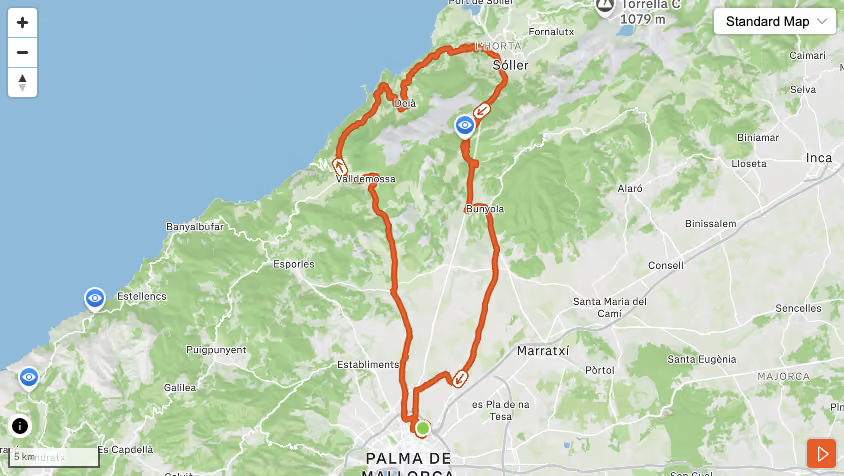
Palma - Valldemossa - Deià - Sóller - Bunyola - Palma
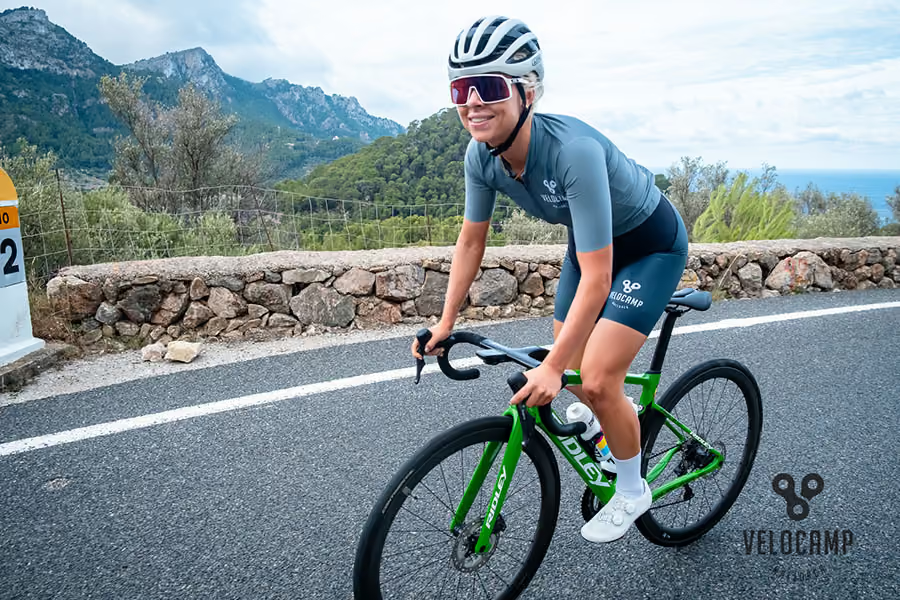
You simply cannot visit Mallorca to cycle and not ride this route. Not only does it incorporate some of the most spectacular views, descents, and climbs anywhere on the island, let alone in Europe, but it's also a fantastic training ride that can either be a brilliant slow Zone 2 fat burning ride or one that can completely rip your legs off, depending on the mood you're in on the day. I honestly don't believe there's a more scenic ride that takes in as much variation as this one does on any ride in Mallorca under three hours. It's definitely one that I do regularly.
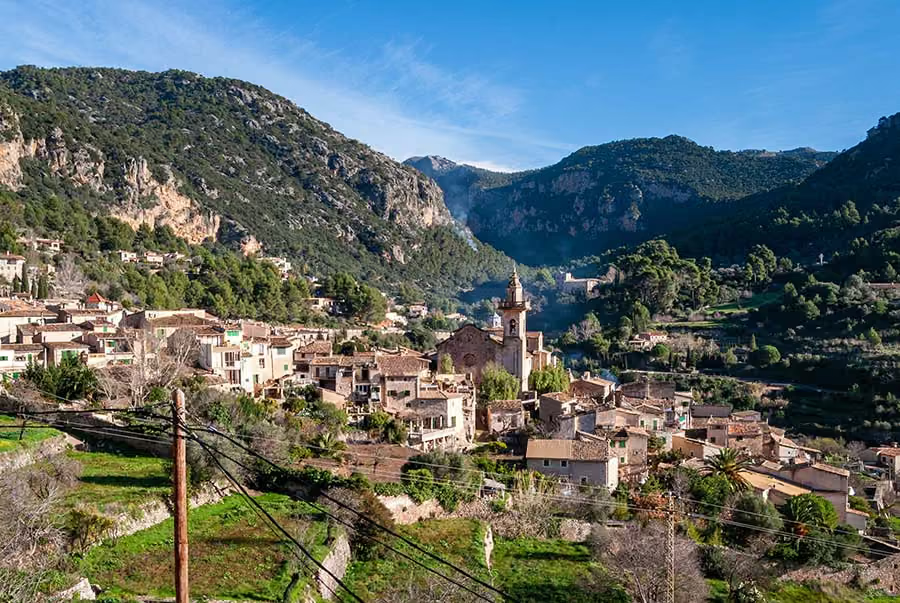
Valldemossa
Working your way out of Palma, the beginning of the ride is quite front loaded, with the first 18 kilometres being almost entirely uphill as we battle our way up to the beautiful mountain village of Valldemossa. The first 10 kilometres or so, admittedly, aren't the prettiest. We do have to ride some of the busier main roads before coming off one of the major roundabouts and beginning our climb up to Valldemossa.
I personally find this climb to be quite challenging. Even though it's not the steepest, there's something about the fact that it's quite straight and you can see well ahead, giving you an idea of just how far you've still got to go. Combine that with the fact that the road can be quite narrow in places, and it's quite common to find cars behind you waiting to overtake, which can add to the pressure and make you want to push. I always seem to find myself really going for it on this climb. 20min is a tough time to shoot for on this climb if you're up for a challenge!
In places it can get steep. About a quarter of the way into the climb, when you pass the car park on the left, I'd say there's a continuous section of around 800 metres that sits between 8 and 10 percent. If you hit this climb on a hot day, you can really feel it. Once you get over the steep section, it flattens out to a more consistent 5 to 5.5 percent as you complete the 5 kilometre climb into the busy village.
Check out the views to your left as you start your approach. Valldemossa is regularly voted one of the prettiest villages on the island, and you can really see why. There's quite a bit going on in the village, including cafés and a couple of small supermarkets, so if you've already drained your bottles, now is a good time to fill up.
Deià
We roll on through into a short descent before making a right turn in the direction of arguably the most beautiful village on the entire island, Deià. We pass the petrol station on the right and begin quite a punchy ascent. It's short but sweet, sitting at an average of around 10 percent for just under a kilometre. This is one of those climbs where you just want to get to the top rather than blow your legs off trying to set a personal best, as it's really a bit of a nothing climb.
Once you come over the top, we now have almost six kilometres of fast, smooth, and breathtaking tarmac that carries us all the way down into the beautiful village of Deià. Take care on this stretch of road. It's easy to get carried away as you and your mates sit in the drops trying to max out your speed. There's also not much traffic, although you do occasionally get some of the larger buses using this route. So take care on the bends, but at the same time, enjoy it. It's an incredible descent.
Once you drop into the village, the bakery in Deià is hard not to stop at to experience one of their incredible sandwiches or cakes, with one of my favourites being their almond croissant. A word of caution, though. This is probably the most expensive place to buy refreshments on the entire route. A croissant and a Coke could easily set you back 8 to 10 euros, but I'd argue it's probably worth it.
Llucalcari
Coming out the other side of Deià, we're into some beautiful undulating roads with some of the best views you'll see anywhere. As you hug the coastline on your left hand side, you're treated to some of the finest scenery anywhere on the island. The last two and a half kilometres see you climbing up Llucalcari. This is a good one to push on and test the legs before coming over the top, passing the beautiful hotel on the summit, and beginning your final descent.
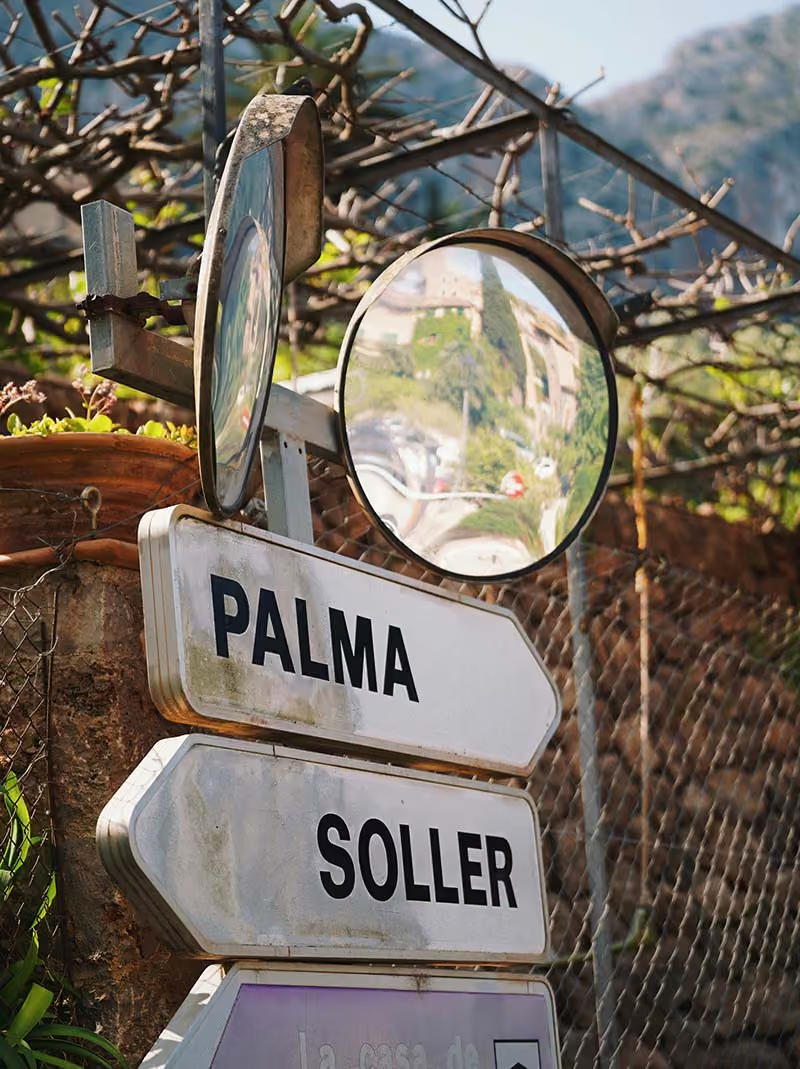
Sóller
This is one of my personal favourites. Nearly four and a half kilometres of some of the smoothest roads and beautiful twisty bends, with the sea on your left. Towards the latter half of the descent, the beautiful valley of Sóller comes into view, and you can really pick up some speed on the final straight section that drops you down into Sóller itself.
Now we have the main climb ahead of us, and it's quite an intimidating one. As you look straight ahead after making the right turn, all you can see is one gigantic mountain in front of you, and you know that somehow you have to get on the other side of it before you've got any chance of making your way back to Palma.
This is the thing about Sóller. Whenever you're there, there's no good way out. Whichever way you choose to go, it's uphill because Sóller sits so low in the valley.
So we begin the climb.
From the lowest part of Sóller, we're looking at almost 10 kilometres before reaching the very top of Coll de Sóller. The first five kilometres or so, admittedly, aren't the best. We have to take the main road out of Sóller, of which there is only one. It's straight, it can get quite hot, you may well have a headwind, and there's always plenty of traffic. Stay well over to the right and keep your concentration.
Eventually, after climbing the four and a half kilometres at around 5 percent on the main road, you'll see the tunnel come into view. It's very important that you do not ride through this tunnel, as cyclists are prohibited. It's for cars and buses only, and you risk a heavy fine if you go through it, not to mention all of the heckling from the drivers who'll be overtaking you!
Just before the tunnel, you'll see the road split off to the left. This is the old mountain road that everybody used before the tunnel opened around 30 years ago.
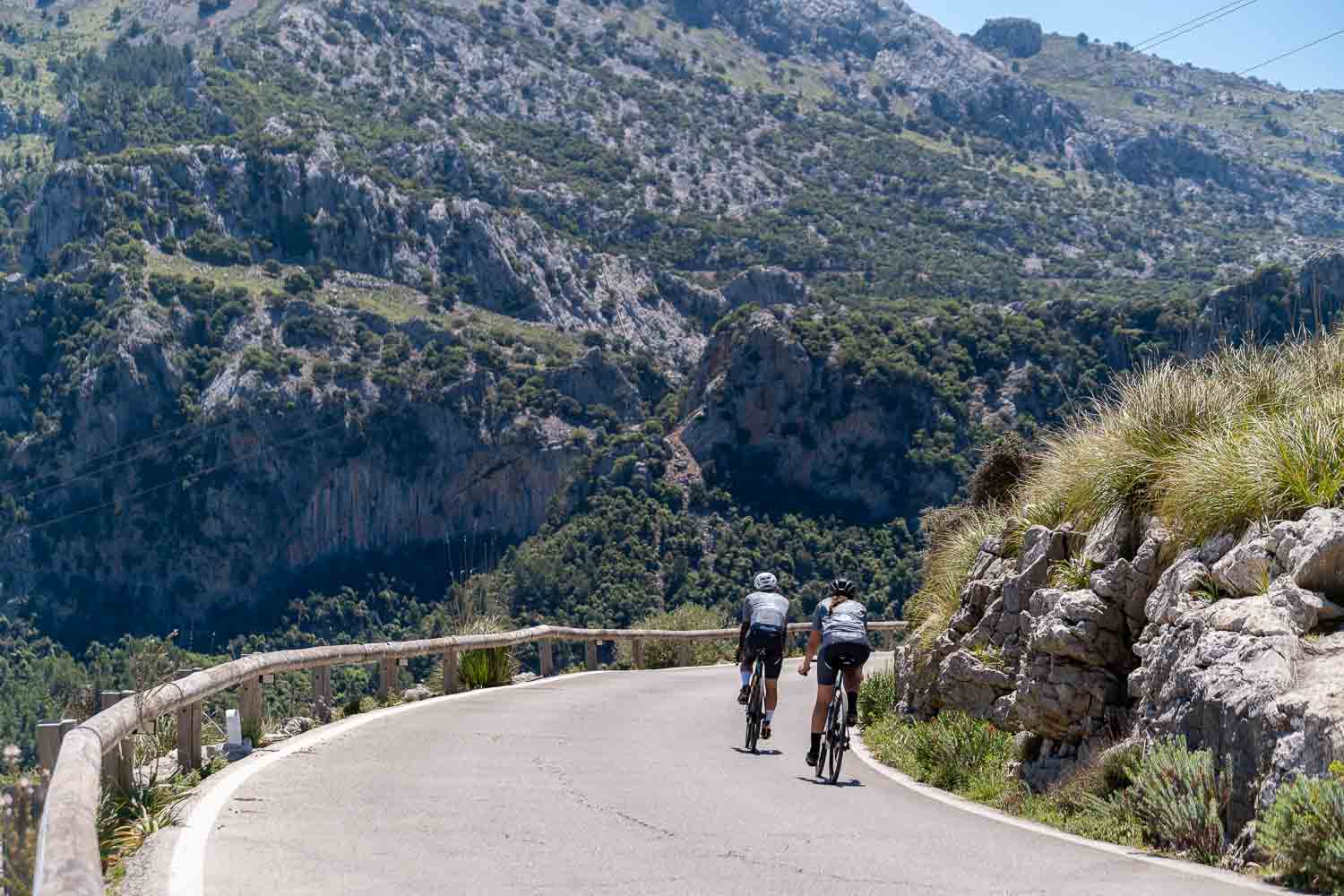
This climb is like a mini Alpe d'Huez. I think there are more than 25 switchbacks as you begin working your way up, with the very beginning probably being the steepest, topping out at around 7 or 8 percent before settling into a very consistent gradient of around 5 percent all the way to the top.
This is definitely one where you want to find your rhythm. If you've got a friend to chat to on the way up, it can make the climb pass much quicker. If you're putting in a proper effort, though, it'll feel twice as long because some of those switchbacks can really bite.
Upon reaching the top of Coll de Sóller, you'll probably be greeted by plenty of other cyclists who like to gather there, many of whom will have climbed up from the opposite side so It's quite a common place to stop for a break. There is an awesome cafe at the top called Ca'n Topa, drop in for some lemon cake ‘if it’s open’
Personally, as I've mentioned on some of the other routes, I like to roll straight over the top and keep going rather than letting the legs go cold. I keep the pedals turning as I descend the other side of Coll de Sóller before eventually reaching the main Sóller road that takes us back towards Palma.
Take care on this descent. The road surface isn't great. It's on the list to be resurfaced, and there are quite a few potholes, broken sections, and patches of gravel on some of the switchbacks. Personally, I just like to roll down while keeping the legs moving and taking in the views.
Around four kilometres later, you'll reach the bottom, and this is where the fast stuff begins.
Bunyola
We're back on the Sóller road, and after joining it we have quite a fast descent. The road is wide, with a large hard shoulder that allows you to really build up some speed safely. You have around three kilometres of fun here before taking a left turn and joining my preferred route back through Bunyola on the Camí de Bunyola road that I mentioned on one of the earlier routes. It's much quieter than the Sóller road, less windy, has far less traffic, and is simply a much more pleasant way to complete the ride.
Towards the end of the route, I make a right turn and take some of the back roads that lead me towards the part of Palma where I live. However, if you're staying in central Palma in a hotel, simply continuing straight will take you directly into the city centre.
If you put your head down, keep pushing, and don't make any stops, you should be able to complete this ride in somewhere between two and a half and three hours, depending on your fitness level.
It's challenging but beautiful, and it's probably the route I ride more than any other.
Enjoy it, and don't forget that almond croissant stop in Deià. Expensive, but well worth it!
“When you arrive in Alaró, if you’re in no rush, there’s a great café here called Cycling Planet. The owners, David and Laura, are two of the nicest people you’ll ever wish to meet.”
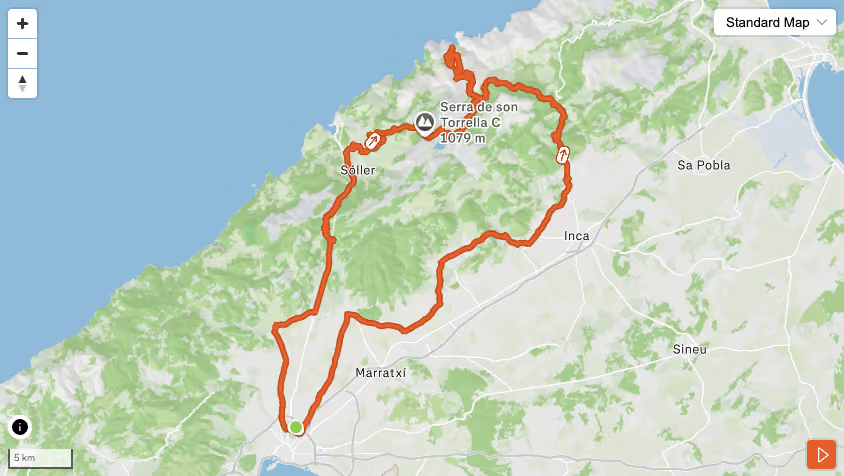
5. The Big Kahuna
Palma - Alarò - Caimari - Sa Calobra - Escorca - Sòller - Bunyola - Palma
Now, this is a big day, I'm not going to lie. But who knows, you might be reading this as an experienced rider, or someone who really wants to test themselves on a big mountain stage here in Mallorca, so I'll include it.
This is something that I'll ride occasionally, maybe once every couple of months, on a day where I've got plenty of time. It's always nice to do with a friend. I personally think that when you're doing long, challenging rides like this one, regardless of your fitness level, especially during the warmer months, why not always try to go with someone? You never know what could happen. It could be anything from a mechanical to an unexpected health issue. It's always good to know that there's someone else there who's got your back, so that's something worth considering, especially on this particular route.
This route is going to take in multiple Category 3 climbs, and there will also be periods when you're up in the mountains around Escorca where phone service can be very sketchy. The elements can also be very unpredictable. You could head up into this area of the mountains under blue skies and sunshine, then all of a sudden experience tremendous winds or rain as you're heading towards the highest roads on the island. Again, it's something worth considering when deciding whether to ride solo or not.
We'll leave Palma and start heading north up the Camí de Bunyola road again. It's a little quieter, there's less traffic, and it's just that little bit more scenic. We'll take a right turn at the roundabout and head in the direction of Santa Maria. Here, the road widens a little, but there's a big shoulder on the right and some lovely smooth tarmac to enjoy.
We make a turn onto the MA 2020, which is a narrower road and one of the most cycled roads on the island. It's very common to see big groups of cyclists thundering along here, and the cars are generally very respectful and happy to wait. The left turn that takes you into the back lanes towards Alaró can sneak up quite quickly and almost appear out of nowhere, so keep a close eye on your route. Otherwise, it's very easy to overshoot it. If you get to the bridge that passes over the motorway, you'll know you've gone too far. Just turn around and head back.
Alaró
We've now got around eight kilometres of small country lanes, which are really enjoyable to ride and, again, are an incredibly common route for cyclists heading towards or leaving Alaró, arguably the most popular cycling village on the island. Eventually, you'll arrive in the village of Alaró, and here's another great opportunity to stop in at Cycling Planet for one of the best slices of cake or a fantastic pa amb oli you'll find anywhere in Mallorca.
Leaving Alaró, we're going to tackle the first real climb of the day, which is Coll de Tofla. It's not too long, just a few kilometres, and it's a good one to get the legs warmed up.
This section of road can get incredibly narrow, and occasionally a car might come tearing around one of the blind bends. Be sure to ride in single file and take good care.
The descent on the other side of Tofla is very fast and, in my opinion, even more treacherous than the climb itself. Take care of the tree roots that are pushing up sections of the road surface. In dappled sunlight, they can cause you to lose grip on the bars if you're not paying attention. It's something we always make sure to include in the briefing whenever we ride Tofla during our Velocamp Mallorca camps.
Lloseta
Passing through the town of Lloseta, the road surface isn't great, so take care. Continue through the village of Selva before approaching the bottom of the first main climb of the day, Coll de sa Batalla.
At around 7.9 kilometres long, it's one of the longer climbs on the island. What's nice about it is that it's never too brutal. The gradient is very consistent, the scenery is beautiful, and there are endless switchbacks taking you all the way to the top.
With an average gradient of somewhere between 4 and 5 percent, it's a really nice climb to either make an effort on or simply find a comfortable rhythm and chat all the way to the summit. Considering what's still in front of you today, I'd strongly suggest using this as a really good Zone 2 warm up and simply preparing the legs for the much bigger climbs that are still to come.
Upon reaching the top, you'll see probably one of the most famous Repsol garages anywhere in the world. This is probably the only petrol station that sells far more coffee and cake than it does petrol or diesel. During the high season, the place gets absolutely swamped with cyclists, as it's one of the biggest meeting points for riders coming from Pollença, Sóller, or Palma.
Again, considering what you've still got ahead of you, it might be worth making a quick stop here. Something to bear in mind, though, is that during the high season the queues can be long and service can be slow.
Escorca
Leaving the garage, we're going to continue along the undulating roads through Escorca, with some notable climbs and some really fun descents. If you're riding this during the winter months, the road surface here can become incredibly green with moss. Being high in the mountains, some sections don't see direct sunshine for months at a time, so do take care. Remember that in places the road can also be quite narrow.
During the high season, you also need to keep a close eye out for the large coaches and buses that travel along these roads. They're used to cyclists, but the roads can be tight in places.
You'll stay on this undulating section for around 10 kilometres before eventually the famous stone archway comes into view. This is where we leave the main road and begin the real highlight of today's ride.
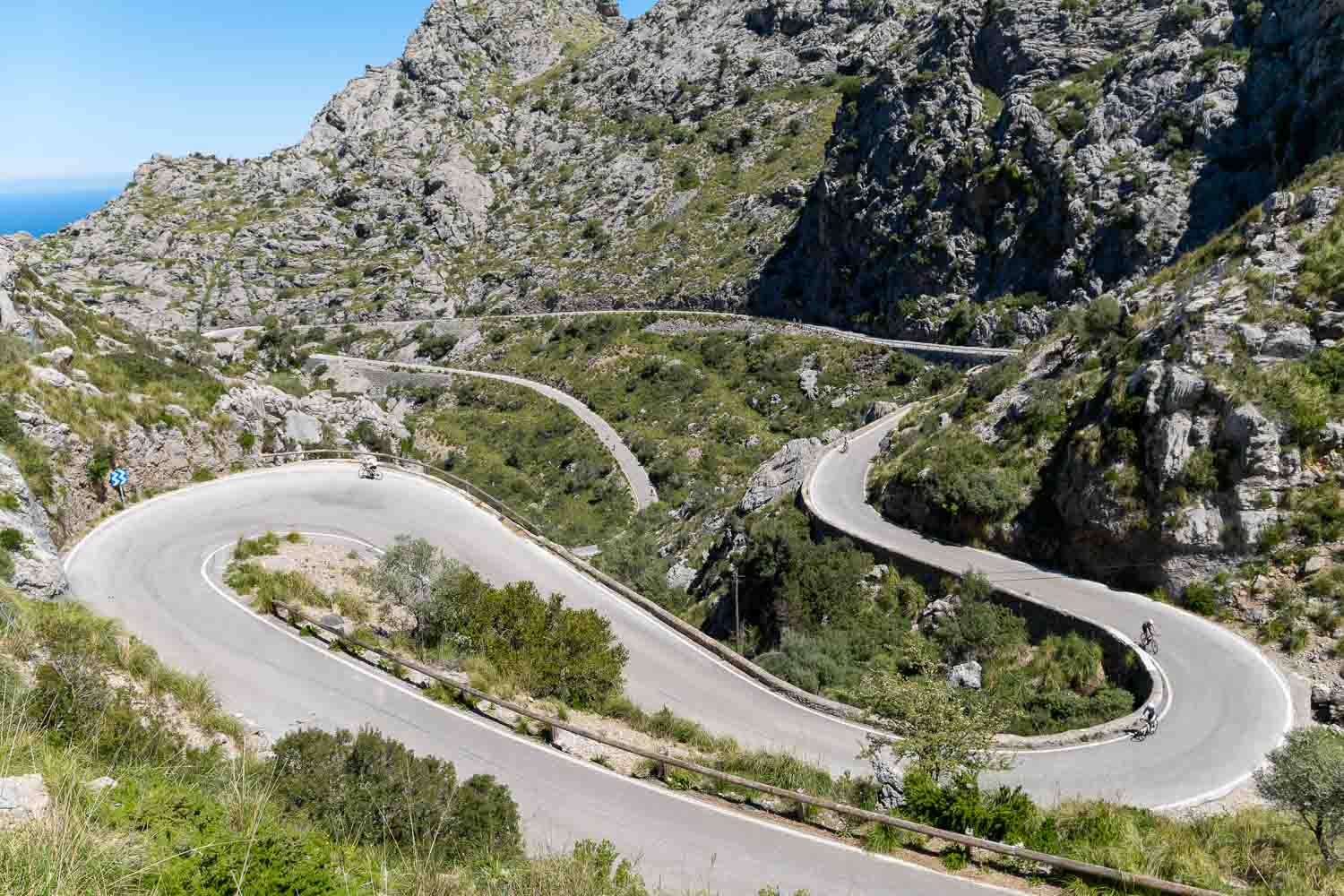
The world famous Sa Calobra.
Sa Calobra
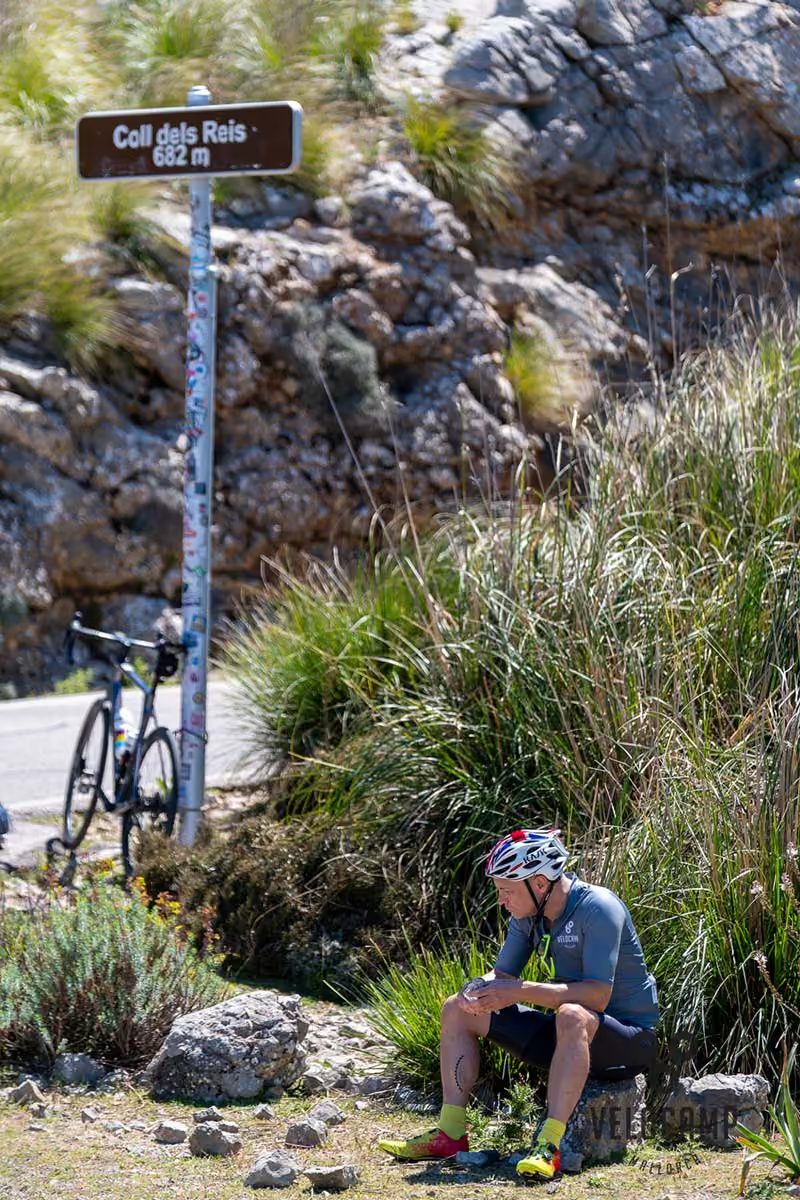
What many people don't realise about Sa Calobra is that it doesn't actually begin with a descent. First, we have to ride around three and a half kilometres of quite steep terrain before we reach the very top of the famous Coll dels Reis. Only then can we start the descent.
This three and a half kilometres sits at an average of between 6 and 8 percent, and with some distance and elevation already in the legs, this opening section of Sa Calobra can really sting. Again, knowing what's still in front of you, I'd recommend just taking it easy and spinning your way up to the very top of Coll dels Reis.
Now the fun can begin.
Ten kilometres of eye watering, skin tingling craziness as you start to descend this corkscrew of switchbacks. I would say this road probably sees more accidents than anywhere else on the island. People are so amped up and full of adrenaline during the descent that they start taking unnecessary risks and overestimate their own level of experience on a bike.
The switchbacks come up fast, and in some places they can be very slippery. During the peak season, there's a huge amount of traffic travelling both up and down this road, which can also mean patches of diesel, potholes, and broken sections of tarmac in places. So enjoy it, but do take care.
Remember, if you want to stop to take pictures, which most people understandably do, make sure you check behind you first. Don't just stop dead in the middle of the road because there's a good chance something might hit you from behind, most likely another cyclist. Pull well over to the right and find a safe place to stop.
Once you eventually reach the bottom, you'll be greeted by the stunning blue water of the Mediterranean, a small selection of cafés, and some fantastic photo opportunities, before the realisation suddenly hits you that you've now got to climb all the way back to the top again.
Personally, I wouldn't stay too long. Your legs have already started to cool down throughout the twenty to twenty five minute descent. I'd simply make sure my bottles were full, grab a gel, smash a Snickers, or whatever you've got in your back pocket to lighten the load for the climb, and then it's time to go.
It's decision time. Are you going to make an effort, try to beat your previous PR, or set a time you can brag about to your mates back home? Or are you going to take it easy and simply focus on getting to the top without completely blowing yourself apart?
Remember, on this route there's still plenty of climbing ahead, even after Sa Calobra is behind you. So it's completely up to you.
A really respectable time here is somewhere between 45 minutes and an hour. I'd say anything under 40 minutes would be considered an exceptional ride. Ten kilometres long at an average of around 7 percent, this climb is enough to challenge even the strongest riders.
Get your head down and enjoy it.
It really is an incredible experience.
I'm afraid, upon reaching the top, I've got a little bit of bad news for you. We're going to make a right hand turn and immediately start climbing again, and it's also reasonably steep. Around five to six kilometres here at an average of around 6 percent. It's really going to sting, especially after you've just battled your way back up Sa Calobra.
This section of road always makes me feel like I'm miles away from anywhere. Phone service comes and goes, and you really start to appreciate just how high up in the Tramuntana Mountains you are. At least as high as you can get on public roads, anyway.
Once you reach the tunnel, just past the reservoir on the left hand side, you're greeted with a fantastic reward. You're about to descend the longest road in Mallorca.
Fourteen kilometres long, it takes you from the highest roads on the island all the way down into one of the lowest points in Sóller. It's very straight in places and almost entirely downhill at around 5 percent, apart from a couple of very short sections where the road actually rises slightly. Get down in the drops and enjoy your reward after all the climbing you've just completed.
But again, please take care. During the Mallorca 312 Gran Fondo, you always see riders sitting in the rocks on this descent who, unfortunately, thought they were Tom Pidcock and came unstuck. But do allow yourself to crack a smile as you take in the valley views of Sóller to the left. It really is a fantastic descent.
I'm afraid it's back up again now, and this is one that you may have already done if you're following these routes in order. We're back down in the valley of Sóller, and there's only one way home from here, and that's up.
Coll de Sóller
We've got to tackle Coll de Sóller again. Remember that busy main road that takes you up to the tunnel before hooking the left turn and beginning those long switchbacks up and over the mountain. You might be hanging here. You've already got 100 plus kilometres in the legs and a huge amount of elevation, so maybe, again, this is one to pace. Chat to your friend, and even top off the bottles and grab a food snack at the petrol station in Sóller before beginning the ascent.
It's another long one, but you'll get there.
Once you reach the top of Coll de Sóller, it's time to celebrate. You've made it. You've completed the mountain route. The queen stage. It's all downhill from here.
You have the option to celebrate with a piece of killer lemon drizzle cake at the café on the top of Coll de Sóller, or simply roll over the top and continue the descent. It's up to you. But remember, the descent is sketchy. Gravel, potholes, and lots of switchbacks, mixed in with the occasional truck coming upwards, make Coll de Sóller definitely one to concentrate on. When you're tired like this, it's easy to have a lapse in concentration, and no one wants to come off at the end, so go slow.
Upon reaching the bottom, we're into that fast descent again past the two petrol stations on the Sóller road. Again, like I've said before, I want to avoid the rest of the Sóller road, so I'm going to hook a right at the roundabout and head towards L'Esgleieta, taking this way home. Definitely much more favourable, in my opinion.
From here, we're on the home straight through Son Espanyol and rolling back into Palma.
It's been a big day. You're probably going to be completely wiped out and spend the rest of the day laying in the air conditioning or stuffing your face with pasta and ice cream. But you can do it guilt free.
You made the queen stage.
Congratulations.
You've ticked it off the list, and it's something to brag about to your friends back home.
Who knows, maybe you might even give it another go before heading home. Maybe in the opposite direction. Just as challenging. Just as fun. But at the same time, a completely different ride.
Wild.




Ride Them All With Velocamp Mallorca
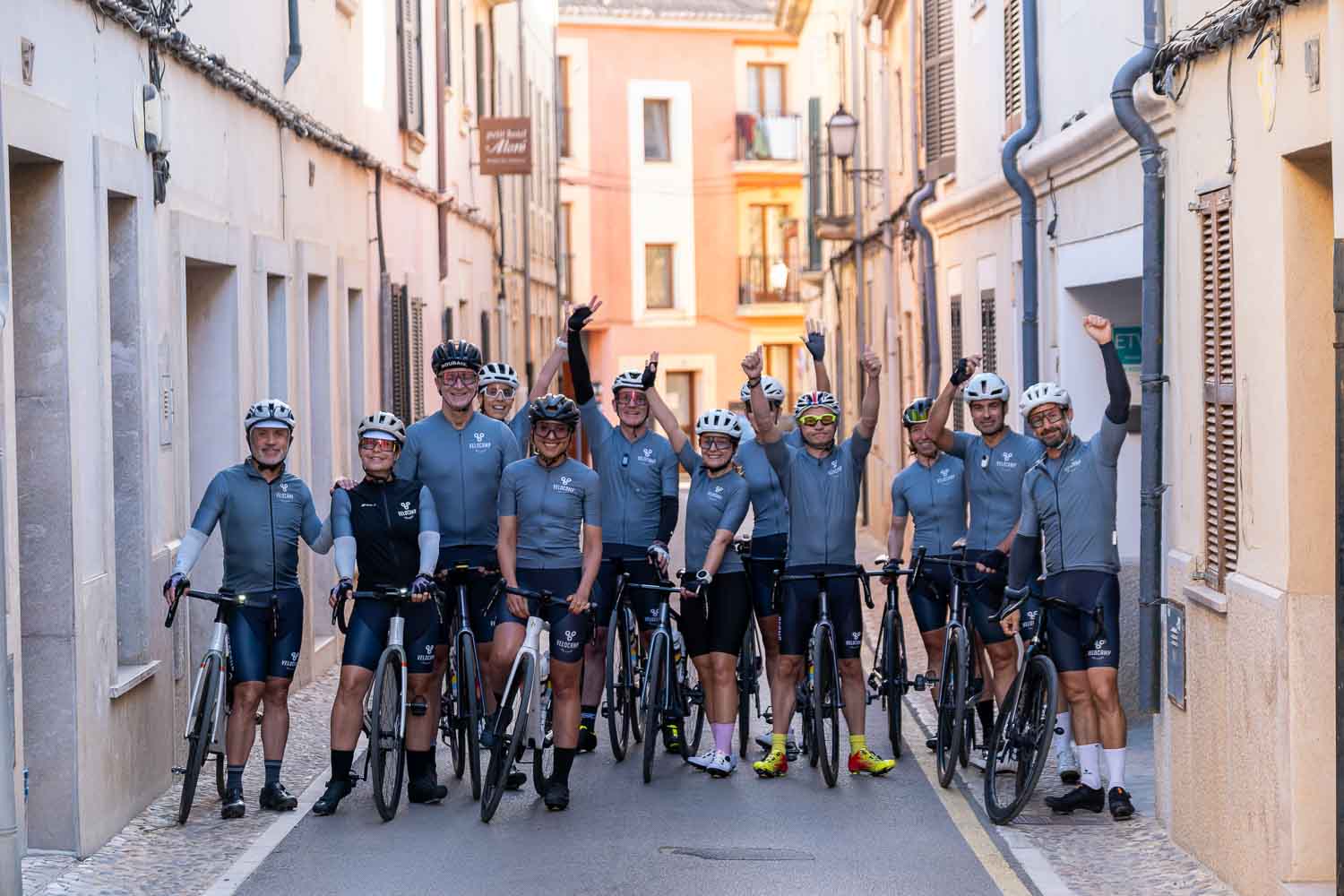
At Velocamp Mallorca, we ride routes like these from our villa in Alaró, the best cycling base on the island.
No shuttles. No taxis. No wasted time.
Just incredible riding, full support on the road, chef prepared meals, daily recovery and a private villa with a huge pool waiting for you each day.
Explore our Mallorca cycling holidays and start planning your trip!
Stay up to date
Get weekly newsletters about cycling and all that good stuff, straight to your inbox.