
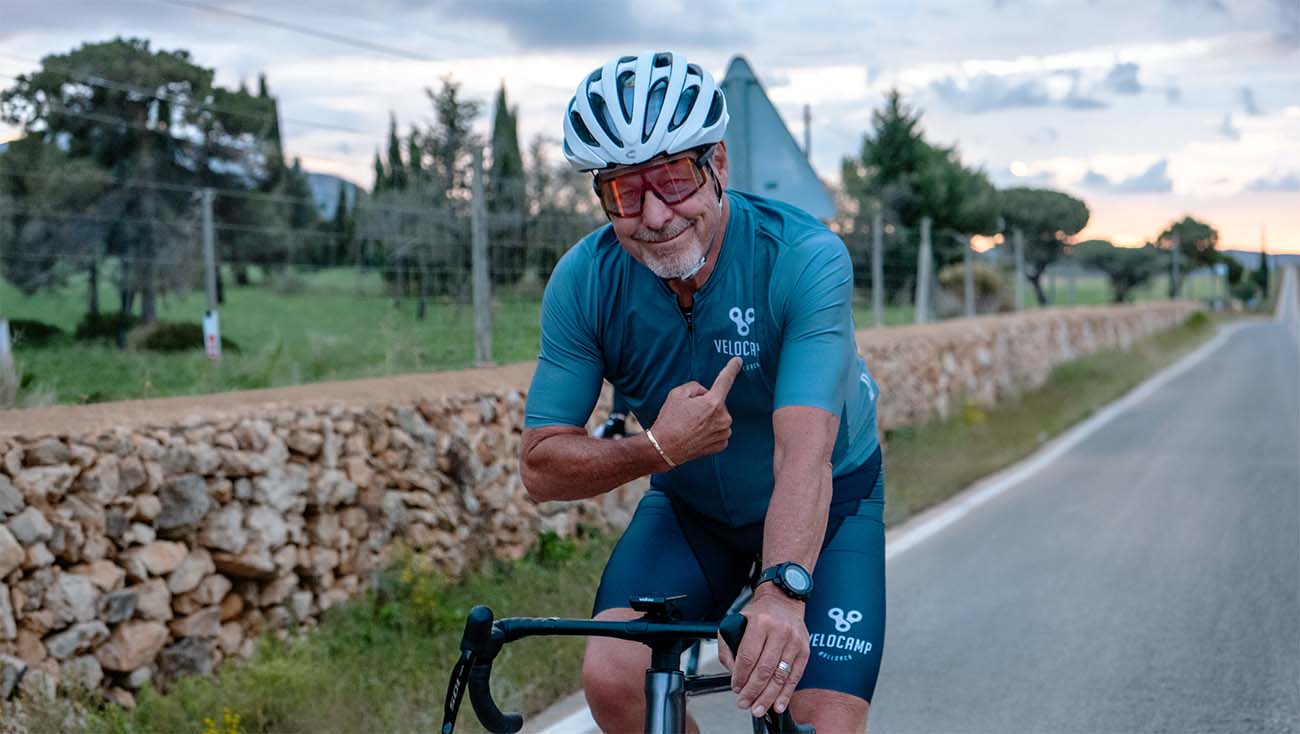
There is a moment that a lot of cyclists in their fifties describe in almost exactly the same way. They are somewhere on a climb, legs turning steadily, breathing controlled, and they look across at a rider half their age who is blowing hard just to keep up. And they think: when did this happen? When did I get good at this?
It is not a fluke. It is not beginner's luck arriving thirty years late. It is something that coaches, sports scientists, and experienced riders have known for a long time, even if it rarely gets said loudly enough. Cycling is one of the few sports in the world where your fifties and sixties can genuinely be your best years on the bike. Not just manageable. Not just okay for your age. Actually better. And for the growing number of American and Canadian cyclists discovering Mallorca cycling holidays for the first time in their later decades, that realisation tends to arrive somewhere on the roads of the Serra de Tramuntana, with the Mediterranean glittering below and the Velocamp support vehicle waiting at the top.
The Science Actually Backs This Up
The fitness industry has spent decades telling people over fifty that they are in decline. And while certain physical benchmarks do shift with age, the full picture is considerably more nuanced than most people realise.
What research consistently shows is that endurance performance, which is the foundation of road cycling, holds up remarkably well into later life. Unlike sprint-based or explosive sports that depend heavily on fast-twitch muscle fibres, cycling rewards the kind of slow-twitch endurance capacity that actually ages very gracefully. Your aerobic engine, built over years of consistent riding, does not simply switch off when you turn fifty.
What changes is recovery time, peak power output, and the ability to absorb very high training loads week after week. But here is the thing: most amateur cyclists in their thirties and forties are training in a way that is actually counterproductive. Too many hard days, not enough easy ones, not enough sleep, not enough food on the bike. By the time you reach your fifties, you have usually learned enough hard lessons to do it better. You know when to push and when to hold back. You know your body in a way that younger riders simply do not yet.
That wisdom, combined with the experience of thousands of kilometres in the legs, is a powerful combination. It is why so many Velocamp Mallorca guests who come on their first Mallorca cycling vacation in their late fifties arrive expecting to be the slow ones and spend the week quietly surprising themselves.
What Mallorca Does to Your Confidence
There is something about cycling in Mallorca that has a particular effect on older riders. It is not easy to explain until you experience it, but almost everyone who comes for a cycling holiday here talks about it in some form or another.
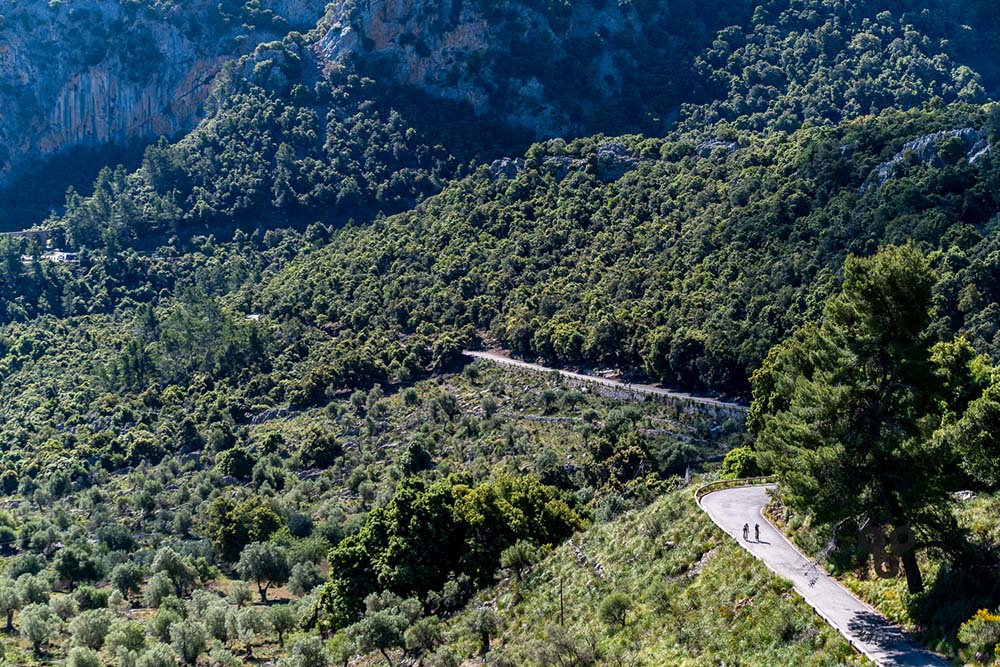
Part of it is the roads. Mallorca has some of the finest cycling infrastructure in Europe, smooth tarmac, quiet mountain passes, virtually no traffic on the routes that matter, and a culture that genuinely respects cyclists. There is no white-knuckling it through city traffic or navigating around potholes. You just ride.
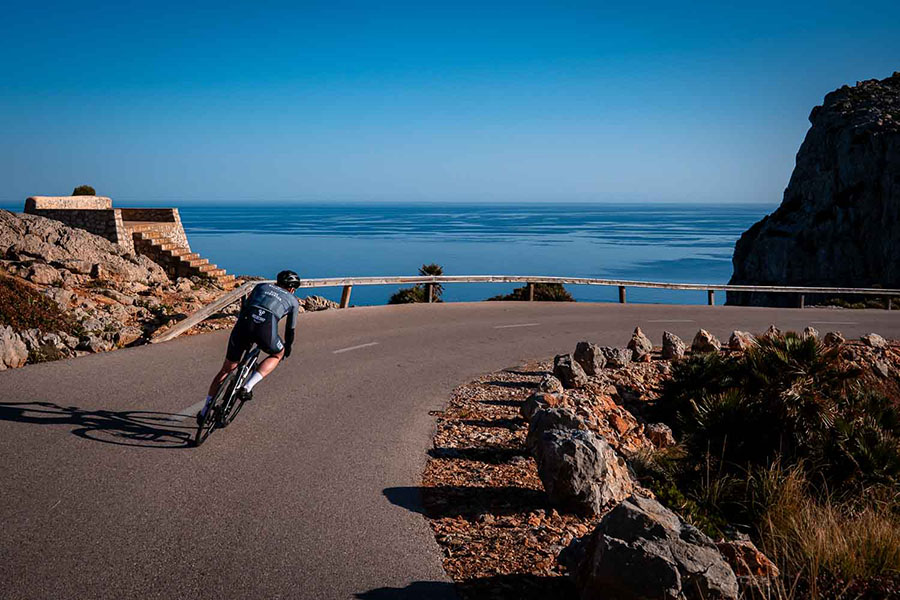
Part of it is the terrain. The island offers everything from flat coastal roads that roll gently along the bay with zero pressure on the legs, all the way up to the iconic climbs of Sa Calobra, the Coll de Soller, and Cap de Formentor. This variety means that riders of every level can find their rhythm and work at their own pace without ever feeling like they are struggling to keep up or holding others back. A structured cycling camp like Velocamp Mallorca is built around exactly this kind of flexibility, with guided rides designed to meet you where you are rather than where someone else thinks you should be.
And part of it, honestly, is the light. Mallorca in spring or autumn is one of the most beautiful places on earth. When you are climbing slowly through the Tramuntana mountains with almond blossoms in the hedgerows and nothing but birdsong and the sound of your own breathing, the usual pressure and noise of daily life simply stops. Something loosens. You remember why you started riding in the first place.
The Mental Shift That Changes Everything
If there is one thing that distinguishes cyclists who thrive in their fifties and sixties from those who plateau or give up, it is not fitness. It is a mindset.
The riders who get better with age are the ones who stop competing against who they used to be and start getting genuinely curious about who they are now. They stop chasing the power numbers from ten years ago and start paying attention to how they feel on the bike today. They stop measuring a good day by how fast they went and start measuring it by how much they enjoyed the ride, how well they recovered, and how present they were on the road.
This is not giving up. This is actually the most sophisticated relationship with sport that exists. It is what the very best masters athletes do, and it produces some remarkable results.
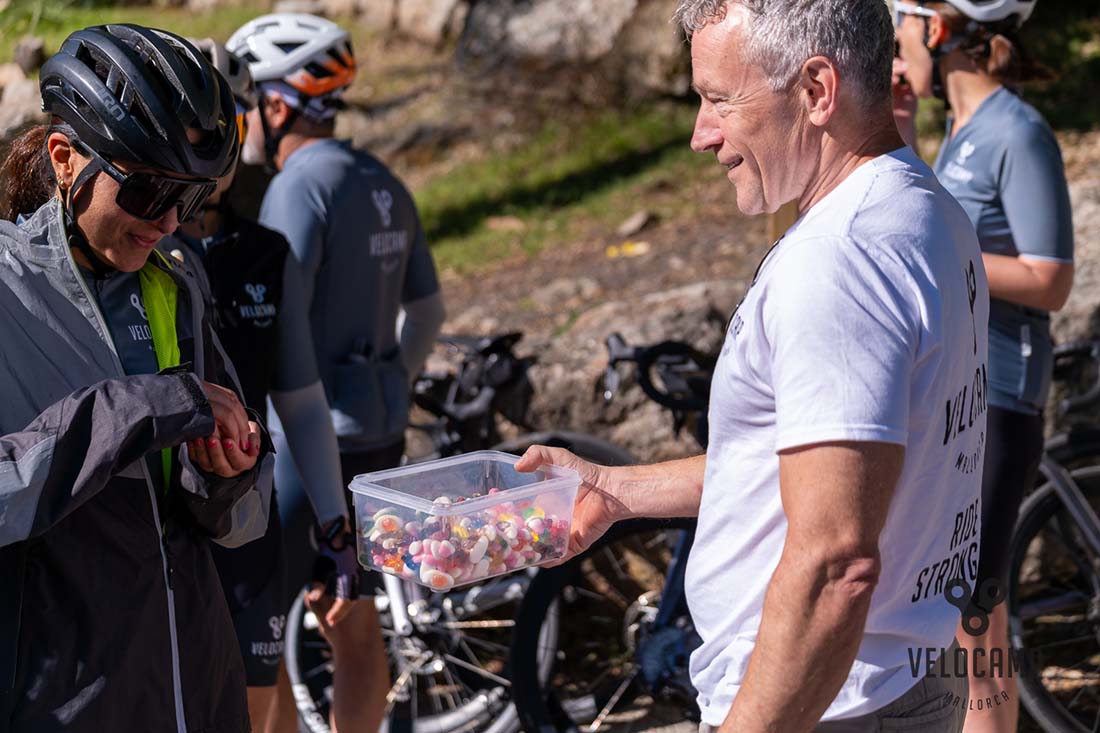
At Velocamp Mallorca, this shift happens naturally over the course of a week. You arrive on a Mallorca cycling vacation with a head full of expectations and a slight anxiety about whether you are fit enough. By day three, something has changed. You are not thinking about your Strava segments. You are thinking about the coffee at the next Velocamp feed station, the way the light hits the limestone cliffs in the afternoon, the feeling of your legs turning smoothly on a long descent. Cycling, the way it was always supposed to feel, has come back to you.
The Practical Advantages Nobody Talks About
There is also a practical side to this that deserves more attention. Cyclists in their fifties and sixties often have something that younger riders do not: time, flexibility, and the resources to do this properly.
When you are in your thirties and forties, a cycling vacation in Mallorca requires juggling children, school schedules, work commitments, and the constant negotiation of family life. By the time you reach your mid-fifties or early sixties, especially if you are retired or semi-retired, the equation shifts completely. You can choose the best week of the season rather than the only week you can get off. You can stay for a full week and actually recover between rides. You can afford a camp with proper guiding, good food, and accommodation that leaves you rested rather than drained.
This is one of the reasons that Mallorca cycling holidays have seen a significant rise in interest from North American cyclists in the fifty-plus age group. The combination of more time, more disposable income, and a growing awareness of how cycling fits perfectly into the lifestyle of someone who wants to stay genuinely healthy and active well into later life makes it a natural match. And Mallorca is the natural destination, with its near-perfect year round climate, its welcoming cycling culture, and its ability to offer both challenge and beauty in equal measure.
USA cycling communities, cycling clubs across Canada, and Peloton riders making their transition to outdoor riding are all discovering that a Mallorca cycling camp offers something no indoor session or local group ride can replicate: a full week of immersion in one of the greatest cycling environments on earth, surrounded by other riders who share the same values and the same hunger for experience.
You Do Not Have to Be Fast to Have the Best Week of Your Cycling Life
This is perhaps the most important thing to say to any cyclist in their fifties or sixties who is quietly wondering whether a Mallorca cycling camp is really for them.
The best cycling holidays are not defined by speed. They are defined by the quality of the experience, the people you ride with, the roads you discover, the meals you share afterwards, and the sense, which is very hard to put into words but completely unmistakable when you feel it, that you are exactly where you should be and doing exactly what your body was made to do.
Velocamp Mallorca is based in Alaró, a small inland village in the heart of the island, which puts you within reach of every major route and climb without the noise and tourist crowds of the coastal resorts. Rides are guided, paced appropriately, and built to give every rider in the group their best possible day on the bike. The philosophy is simple: you bring the commitment and the willingness to be present, and the island does the rest.
The Riders Who Come Back Every Year
At Velocamp Mallorca, we see a pattern repeat itself month after month. A rider in their late fifties books their first Mallorca cycling vacation, often nervous, often underselling themselves in their application, often convinced they will be the weakest in the group. They arrive, they ride, and something happens. By the end of the week they are already asking about dates for next year.
The reasons are always some version of the same thing. The roads are unlike anything they have ridden at home. The structure and support of a guided camp gives them permission to push a little harder than they would alone. The company of other riders at a similar stage of life, people who have figured out that this is the best version of the sport, creates a kind of energy that is genuinely addictive.
Cycling in your fifties and sixties is not a consolation prize. It is not making the best of things. For a growing number of American and Canadian cyclists who have discovered what a week of Mallorca cycling holidays can do for the body, the mind, and the soul, it is simply the best the sport has ever felt.
If you are in your fifties or sixties and you have been wondering whether a Mallorca cycling camp is right for you, the answer is almost certainly yes. The roads are waiting, the mountains are not going anywhere, and the best ride of your cycling life might be closer than you think.
Book your place at Velocamp Mallorca and find out which camp dates are right for you.
supported by