

Every January, millions of people in the United States and Canada make the same decision. They are going to get fit, lose some weight, and actually stick to it this time. A significant number of them buy a road bike or dust off the one that has been hanging in the garage, and they start riding. And then, somewhere around March, something goes wrong. They are riding regularly, they are tired all the time, and the scales have barely moved. They give up, convinced that cycling just does not work for them.
It does work. The problem is almost never the cycling. The problem is the way most people approach it, and a handful of very common mistakes that are easy to make and surprisingly easy to fix once you understand what is actually happening inside your body when you ride.
At Velocamp Mallorca, we see riders arrive every week from across North America who have been cycling for months without seeing the results they expected. By the end of a week riding the roads of Mallorca with proper structure, proper pacing, and a genuine understanding of how the body responds to exercise, something shifts. Not just physically. The whole relationship with the bike changes. This blog is about why that happens and what you can do to make it happen for yourself, wherever you are riding right now.
Why Most Cyclists Get This Wrong
The single most common mistake cyclists make when trying to lose weight is riding too hard.
That sounds counterintuitive. Surely harder means more calories burned, which means more weight lost? The reality is more nuanced than that, and understanding it changes everything.
When you ride at a high intensity, your body relies primarily on carbohydrate as its fuel source because carbohydrate can be broken down and delivered to the muscles quickly enough to keep up with the demand. Fat, which contains more energy per gram, is metabolised too slowly to sustain hard efforts. So when you are pushing hard up a climb or chasing a Strava segment, you are burning glycogen stored in the muscles and liver, not the body fat you are trying to lose.
When you ride at a lower, more conversational intensity, something different happens. The demand on the muscles is lower, the energy can be delivered more slowly, and the body shifts toward burning a higher proportion of fat as fuel. This is what exercise scientists refer to as the fat burning zone, and it is a real and well-documented phenomenon. Riding at roughly 60 to 70 percent of your maximum heart rate, an effort where you can hold a conversation but feel like you are working, maximises the proportion of calories coming from fat rather than carbohydrate.
There is a second problem with riding too hard. Hard efforts leave you ravenous. The body responds to intense exercise by spiking hunger hormones, and most riders who train at high intensity arrive home and eat back every calorie they burned, and often more. Moderate intensity riding produces a much smaller hunger response, which means the calorie deficit that drives weight loss is much easier to maintain.
The Consistency Principle
If riding intensity is the first thing most cyclists get wrong, consistency is the second.
Weight loss through cycling is not produced by occasional heroic efforts. It is produced by regular, moderate riding accumulated over weeks and months. Three rides of two hours at a comfortable pace, done consistently every week, will produce better and more sustainable results than one four-hour sufferfest followed by three days recovering on the sofa.
The reason for this comes down to how the body adapts to exercise. Regular moderate cycling raises your resting metabolic rate, improves your body's ability to use fat as fuel even when you are not riding, and builds the aerobic base that makes every subsequent ride more efficient. These adaptations take time, but they compound. A rider who rides consistently for three months is not just slightly fitter than they were at the start. They are operating in a fundamentally different metabolic state.
This is one of the reasons that a week at Velocamp Mallorca produces results that surprise riders who have been training at home for months without progress. Six consecutive days of riding, structured at the right intensity with proper recovery built in between sessions, creates an extended metabolic stimulus that a weekend riding routine simply cannot replicate. Riders from the United States and Canada who come to Mallorca for a cycling vacation with Velocamp regularly tell us that the week on the island did more for their fitness and their body composition than the previous three months of riding at home. That is not a coincidence. It is physiology.
Nutrition: The Part Nobody Wants to Talk About
Cycling creates a calorie deficit. A two-hour moderate ride burns somewhere between 600 and 1,000 calories depending on body weight, fitness level, and terrain. That deficit is the engine of weight loss. But the relationship between cycling and nutrition is more complicated than simply burning more than you consume, and getting it wrong can actually make things worse.
The most damaging mistake is under-fuelling on the bike. Many cyclists who are trying to lose weight decide that the best approach is to ride without eating, reasoning that the body will be forced to burn fat if there is no food available. This is not entirely wrong in theory, and short fasted rides of up to an hour can have a place in a well-structured training programme. But rides of two hours or more without adequate fuelling cause the body to break down muscle protein for energy once glycogen stores are depleted. You lose muscle mass rather than fat, your metabolism slows in response, and you feel terrible on the bike. The long term result is a body that is less efficient at burning fat and harder to lean out than it was before.
The right approach is to fuel adequately for the duration and intensity of your ride, eat real food that keeps hunger manageable in the hours afterward, and let the calorie deficit come from the exercise itself rather than from restriction on top of restriction. For rides under 90 minutes at moderate intensity, many riders can manage without eating on the bike. For anything longer, eating 40 to 60 grams of carbohydrate per hour keeps the body fuelled without replacing all the calories being burned.
The meals around riding matter just as much as what you eat on the bike. A protein-rich meal within an hour of finishing a ride helps rebuild muscle, keeps hunger controlled for the rest of the day, and supports the recovery that allows you to ride again tomorrow. The cyclists who lose weight most effectively are not the ones eating the least. They are the ones eating the right things at the right times around their riding.
Why Mallorca Changes Everything
There is something about cycling in Mallorca that produces results faster than riding at home, and it goes beyond the simple maths of more hours in the saddle.
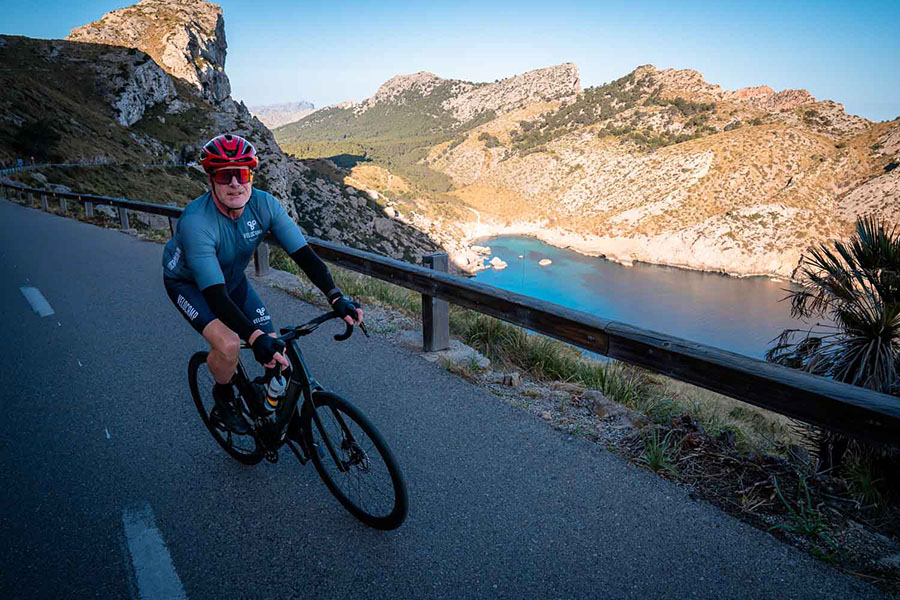
The roads are smooth, the traffic is minimal, and the terrain offers a natural variety that is almost impossible to replicate anywhere else. The flat coastal roads around the Bay of Alcúdia are perfect for long, steady efforts at exactly the fat-burning intensity described above. The climbs of the Serra de Tramuntana, ridden at a patient pace, provide hours of sustained moderate effort that are the single most effective thing you can do on a bike for body composition. And the descents give the legs a genuine rest, which means you can accumulate far more riding time without the same accumulated fatigue you would carry from equally hilly riding at home.
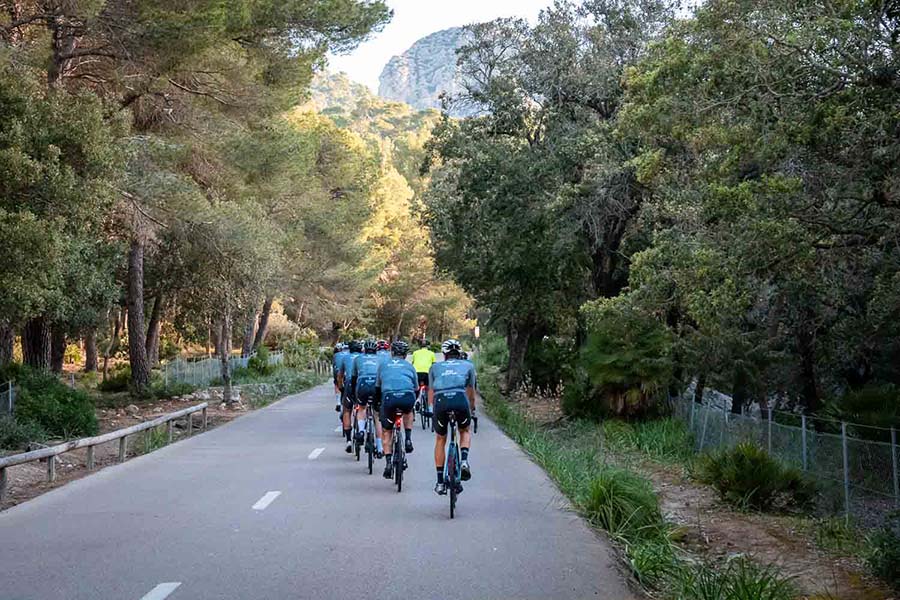
At Velocamp Mallorca, the rides are guided. That matters more than it might sound. One of the most consistent findings in exercise science is that people who ride in a group ride longer, enjoy it more, and push harder at exactly the right moments than people riding alone. Our guides set the pace, know the roads, and structure each day so that riders are working at the right intensity for the right amount of time. There is no guesswork, no navigating with one eye on a phone, and no getting lost on mountain roads. Just riding. Hour after hour, on some of the finest roads in Europe.
The Mallorca climate plays a role too. Riders from the United States and Canada who come to Mallorca on a cycling holiday in spring or autumn find that the temperatures, typically between 15 and 22 degrees Celsius, are ideal for long efforts. No overheating, no need to cut rides short because of the heat, no fighting through cold rain that makes every pedal stroke feel like a negotiation with misery. Just clean, warm, dry riding weather on roads that feel like they were designed specifically for cyclists.
The Mental Side: Why This Matters More Than You Think
Weight loss is not just a physical process. It is a psychological one. And this is where cycling in a beautiful environment, with a group of like-minded riders and proper structure around every session, has an advantage that no gym programme or home training plan can match.
The biggest reason people fail to lose weight through exercise is not physiological. It is that they stop. They stop because it is not enjoyable enough, because it feels like work rather than pleasure, because the results are not coming fast enough, or because life gets in the way and the routine breaks down. Cycling in Mallorca removes most of those obstacles in one go.
When you are riding through the Tramuntana mountains with the Mediterranean below and the road climbing gently ahead, you are not thinking about whether this counts as exercise. You are thinking about the next corner, the next village, the coffee stop at the top. The effort is real, the calories are being burned, the fat is being used as fuel, but none of it feels like the grinding obligation of a Tuesday morning on a stationary bike. That psychological shift is genuinely powerful. Riders who discover that exercise can feel like this tend to keep doing it. And keeping doing it, consistently, over months and years, is exactly what produces lasting change in body composition.
At Velocamp Mallorca, we see this transformation happen every single week. Riders arrive on a cycling vacation in Mallorca carrying the weight of months of inconsistent training and unclear results. By day three something has changed. They are riding better than they expected, eating well, sleeping deeply, and beginning to understand instinctively what their body needs. By the end of the week the question is not whether cycling works for weight loss. The question is how quickly they can get back on the island and do it again.
What a Week at Velocamp Mallorca Actually Delivers
A six day riding week with Velocamp Mallorca typically covers between 450 and 600 kilometres depending on the group and the route selection, with between 6,000 and 9,000 metres of climbing. At a moderate pace on varied terrain, that represents a calorie expenditure that most riders from the United States and Canada would take two to three months to accumulate through their normal riding routine.
More importantly, it is six consecutive days of riding at the right intensity, with the right food, with proper rest between sessions, and with guides who understand how to get the best out of every rider regardless of their level. The body responds to this kind of sustained, structured stimulus in a way it simply cannot respond to two rides a week wedged between the demands of a busy working life.
What makes Velocamp Mallorca different from simply booking a hotel and riding around the island alone is everything that happens between the rides. Every evening, riders have access to recovery boots, the kind of pneumatic compression technology used by professional cycling teams to flush the legs, reduce inflammation, and accelerate the removal of the waste products that accumulate in the muscles during a long day in the saddle. The difference between legs that have spent an hour in the recovery boots and legs that have not is something every rider notices by day two. You wake up ready to ride again rather than wondering how you are going to get through another day.
Daily massage is built into the Velocamp week as standard, not as an optional extra. A proper sports massage after a hard day of climbing does things for the body that stretching and foam rolling simply cannot replicate. It breaks down the tension that builds in the quads, hamstrings, and calves over consecutive days of riding, keeps the muscles supple and responsive, and significantly reduces the soreness that would otherwise accumulate and compromise the quality of every ride that follows. For riders trying to maximise what the week delivers physically, daily massage is not a luxury. It is a fundamental part of the process.
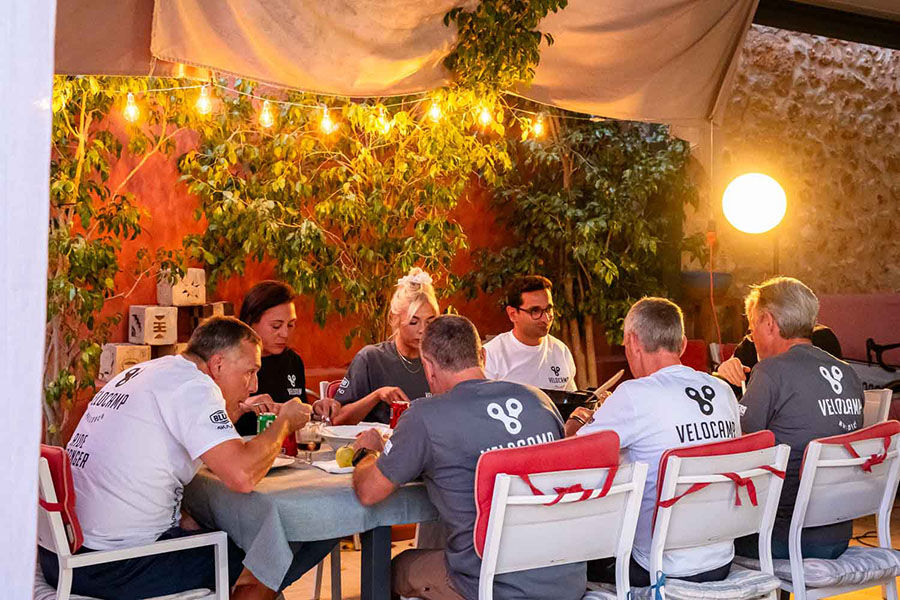
The food at Velocamp Mallorca is built around the same principle. Every meal is designed to support the riding, with high quality protein to rebuild muscle, complex carbohydrates to replenish glycogen, and plenty of fresh vegetables and healthy fats to support recovery and keep inflammation low. Riders are not counting calories or restricting themselves. They are eating well, eating enough, and eating the right things at the right times. For many guests from North America, the week at Velocamp is the first time they have experienced what it actually feels like to have nutrition, exercise, and recovery all working together in the same direction at the same time. The results, in terms of how they feel on the bike and how their body responds day after day, are genuinely eye-opening.
Riders leave Velocamp Mallorca lighter, fitter, and with a completely different understanding of how their body works on a bike. They go home with better habits, a clearer sense of what intensity they should be riding at, and the kind of motivation that only comes from having experienced a genuinely transformative week on the bike.
If you have been riding for months without seeing the results you expected, a cycling holiday in Mallorca might be the most effective single thing you can do. Not just for your weight. For your entire relationship with the sport.
View upcoming Velocamp Mallorca camp dates and find the week that works for you.

85 pages of tips, including bike hire, best routes, our favourite coffee stops, cycle clothing shops, and plenty more!
supported by